 Sorel's main themes were that:
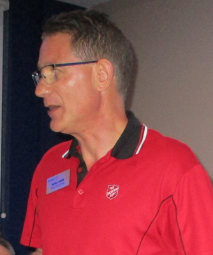 Reno explained that he had first come in contact with our club during the Red Shield Appeal of 2003. A year later he was appointed to Unley which turned 135 years old on 27 October and will be celebrated next Sunday, to which one and all are invited. He has been grateful for the club's support which in recent years has included the provision of the access toilet and help with the Christmas Day luncheon.
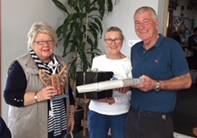 Now this was a trip to remember. About a dozen teams wound their way around the south eastern suburbs and into the Hills along roads rarely travelled by the likes of us. The splendid views were lost in the search for success....and more importantly prang avoidance. A tummy tickling morning tea was put on at the Cherry Gardens Iron Bank Recreation Park. Refueled we ventured on! It was noted in certain areas that those with poor eyesight kept circling back and forth to nail the easy to understand clues. Plenty of copper and silver but none actually found.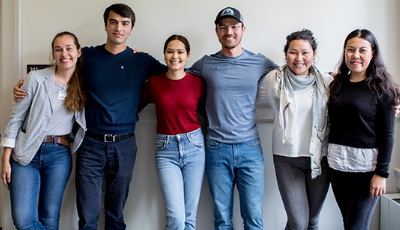
Rotary Scholars from left to right: Nataliya Chemayeva from Turkmenistan, Aminjon Abdulloev from Tajikistan, Jahan Taganova from Turkmenistan, Botir Ismoilov from Uzbekistan, Botagoz Sharipova from Kazakhstan, and Nargiza Osmonova from Kyrgyzstan.
The Central Asian region has been the focus of global water catastrophes for almost two decades now. No one is indifferent to the problems that we share as a region. There are multiple layers to the problem that have transformed political discourse within the countries and have affected relationships between water experts.
All of this personally was ambiguous to me until I started working for the International Fund for Saving the Aral Sea. In my commission, we deal mostly with environmental issues and have some exposure to water-related events. This is what sparked my interest in the topic. I soon developed an understanding that technical solutions alone were not going to bring about desired results without a balanced diplomacy.
When I learned about the Joint Master’s Degree on Water Cooperation and Diplomacy, I recognized that it could teach me the skills that will be necessary to bring innovative water management solutions to my region. So I made the life-changing decision to quit working for a while and go back to school.
The main attraction of this program for me was the deliberate intention to bring representatives from all the riparian states, because solving a problem with friends is easier than with rivals.
The University of Peace in Costa Rica introduced us to a global sustainable development outlook conveyed by the United Nations. At the Institute for Water Education in the Netherlands, we focused more on the technical aspects of water management, including a substantial social component. Finally, Oregon State University in the United States inspired us to apply what we were learning to real cases. We dug deeply into dissonant positions of our countries and shared our views on harmonizing those position. This joint work developed into a ground-breaking activity when we organized a Blue Peace Day for all the students to celebrate “water as an instrument to peace.”
Further, our negotiation skills were advanced during the course on Conflict Management in the Netherlands. We were trained professionally on understanding the positions, interests, and needs of other parties that are essential in resolving any conflict. All this training brought us a clear message that we can fulfill every party’s needs only by cooperation. This is a simple, but at the same time very strong, message that I take away from this program.
Overall, it has been a tremendously rewarding experience. I feel empowered with the theoretical knowledge that is keeping me thinking of how we, as a young generation, can help our countries to strengthen relations in the region where everyone benefits from collaborative decisions.
I will keep working closely with this Central Asian team, as we will be the ones establishing connections in the future. It was great to see how our joint efforts can bring good results. We continue doing a lot of team work, travel, and sharing memories. I truly believe that we will prove to be a great example for future Rotarians in Central Asia.
Editor’s note: The video “Water and Peace 2.0,” made by Water Cooperation and Diplomacy scholars, was selected as the finalist by the Geneva Water Hub and will be featured at the Budapest Water Summit 15-17 October and during Geneva Peace Week 4-8 November.