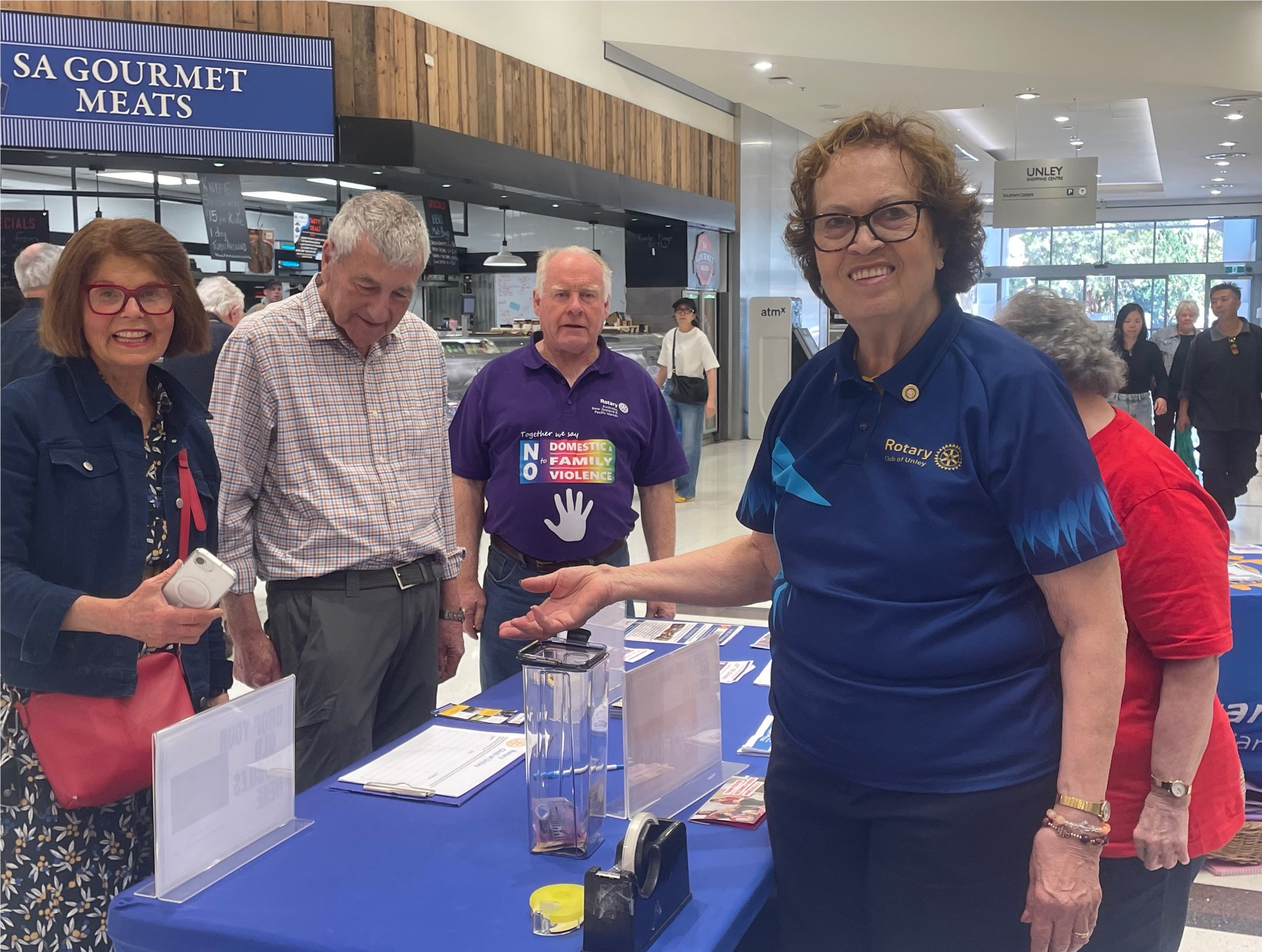
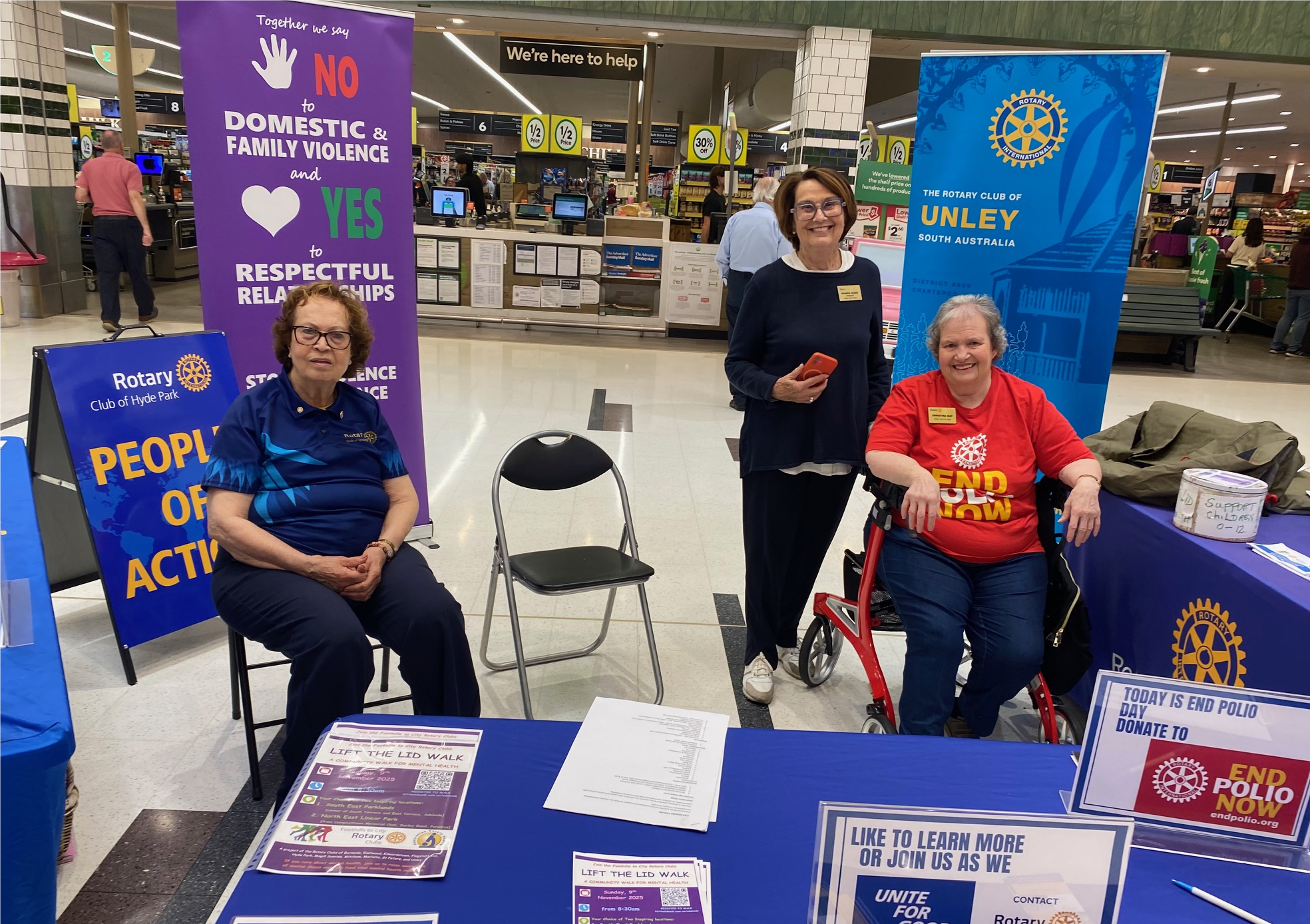
Friday with RC Hyde Park at the Unley Shopping Centre advertising our clubs, programs, and collecting groceries fro Catherine House, mobiles for victims of domestic violence and glasses for Nepal
Patsy, Valerie and the 2 Grahams did us proud again with a scenic tour through our beautiful Adelaide Hills.
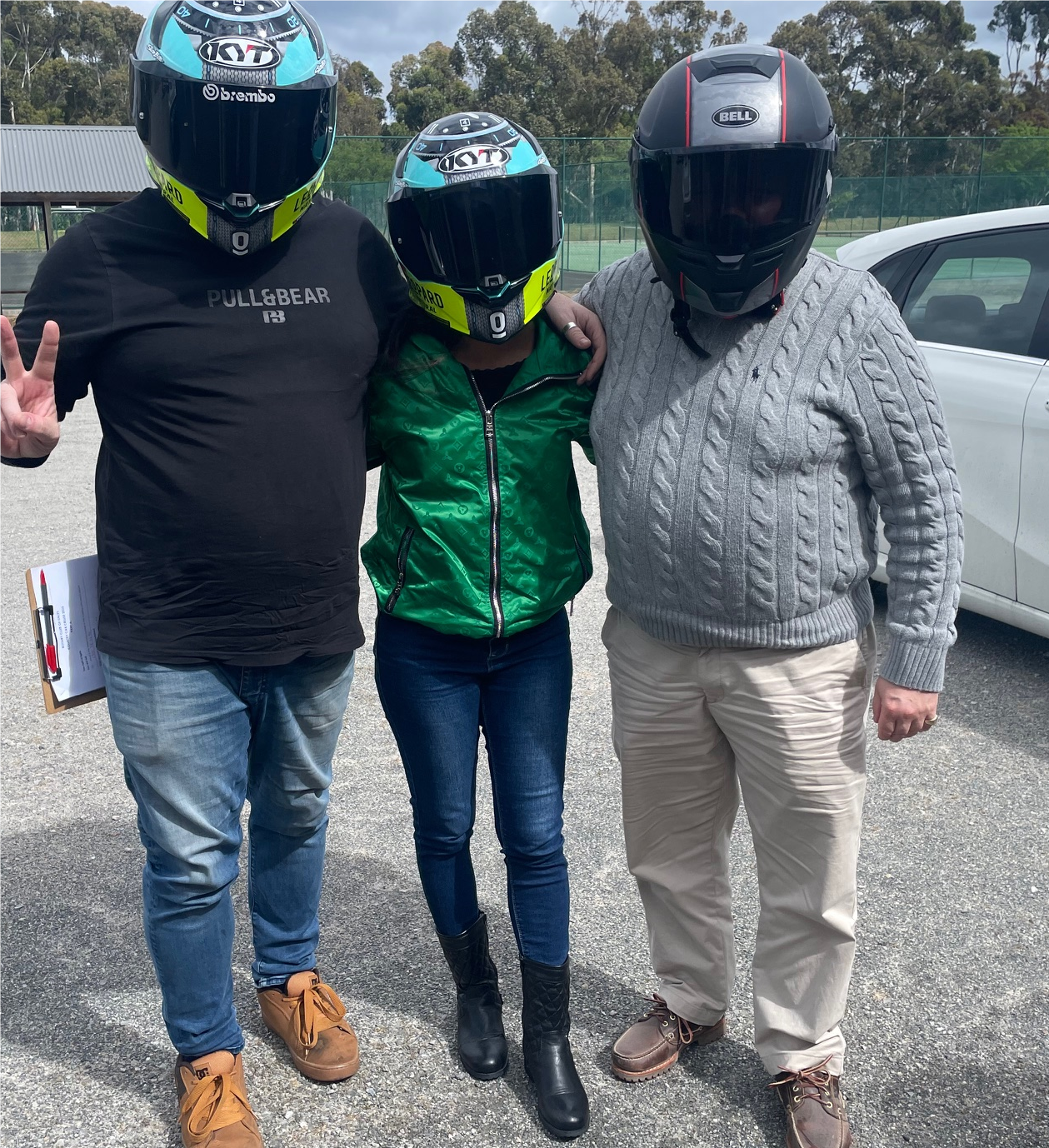
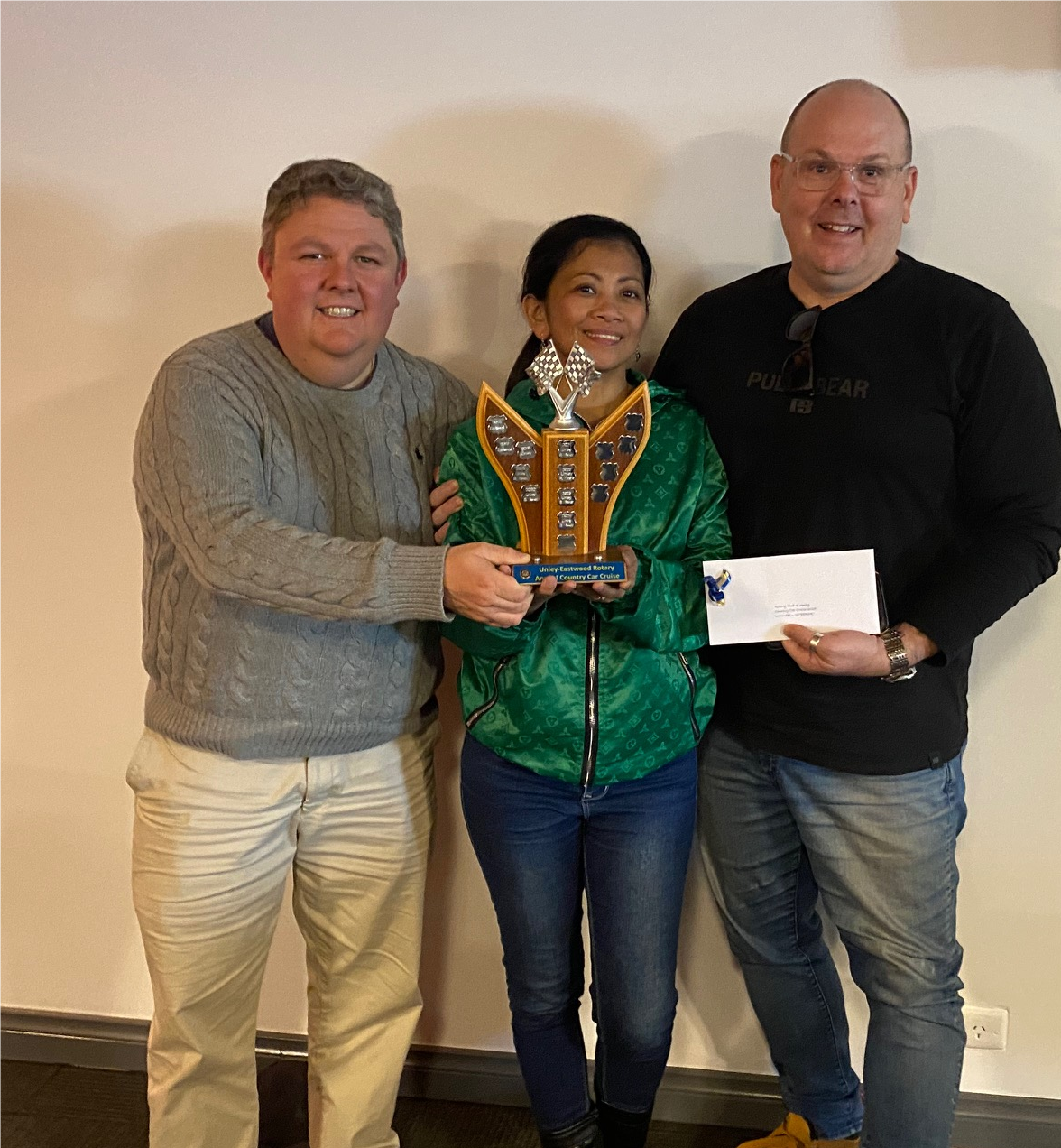
Below we have three strange creatures who turned up for the tummy tingling morning tea. As pseudo bikies they clearly intended to put pressure on the judges.......and they succeeded, pipping the Baker team by half a point. Rowena converted the would-be could-be Nathan and Simon into winners.
Do you have questions about Rotary’s pledge to end polio? We’ve got answers.
By Etelka Lehoczky

You’ve likely heard a lot about polio in recent weeks. Rotary members talk about it all year, but never more than in the month leading up to
World Polio Day on 24 October. It’s one of the most important days of the year for Rotary — a time to reaffirm our nearly four-decade commitment to eliminating this disease from the world.Polio eradication may seem complicated, but it’s actually fairly straightforward. If you’ve ever wondered about the science of the disease, the history of Rotary’s fight against it, or the progress of the global eradication effort, find the answers to those questions and more below.
What is polio, and why is it such a threat?
Poliomyelitis, also known as polio, is a highly infectious disease that mainly affects nerves in the spinal cord and brain stem. Most people infected with the virus don’t show any symptoms, but a small number become paralyzed. Polio primarily targets children under age five.
Polio can spread rapidly from person to person, such as through a cough or a sneeze. If an infected person doesn’t wash their hands after coughing or using the toilet, they can transmit the virus even if they don’t know they’re infected. Polio can also spread through contaminated water in areas with poor sanitation.
Wild poliovirus occurs naturally in the environment and has three types. Type 2 and type 3 were declared eradicated in the 2010s, but type 1 remains. Variant poliovirus occurs when the weakened strain of virus contained in the oral vaccine circulates for a long time and mutates into a form that can cause paralysis like wild polio. Variant poliovirus cases are rare.
Why does Rotary care about polio eradication?
Rotary members are determined to end polio for
many reasons — including that its effects are terrible, and its main victims are young children. Rotary International began working to vaccinate children against polio in 1979. In 1985, Rotary created its PolioPlus program to amplify these efforts. Then in 1988, Rotary and our partners launched the
Global Polio Eradication Initiative (GPEI).
We’ve come a remarkably long way since then. Polio was endemic in 125 countries in 1988; that’s down to two now. The global effort to eradicate polio has prevented an estimated 20 million cases of paralysis.
Wiping out this disease is possible. We are very close to ensuring that no child suffers from polio ever again.
How widespread is polio? Can it affect me?
Wild polio remains endemic in only Afghanistan and Pakistan. But because it spreads so easily, one or two cases can quickly multiply. In our world of global travel, an infected person can carry the disease to the other side of the world even if they aren’t sick themselves. In 2022, an adult in New York, USA, contracted polio and was paralyzed. Genetic testing of the virus infecting that person linked it to polio viruses found in London and Jerusalem. This shows that as long as polio exists somewhere in the world, nobody is truly safe.
How do we fight polio?
Polio is fought primarily with vaccines and environmental surveillance. The GPEI promotes both routine and supplementary campaigns to immunize young children. Surveillance consists of identifying and promptly reporting polio cases and monitoring sewage water for the presence of the virus.
What role does Rotary have in the GPEI?
Rotary helped create the GPEI, whose other core partners include the World Health Organization, the Gates Foundation, UNICEF, the U.S. Centers for Disease Control and Prevention, and Gavi, the Vaccine Alliance.
Rotary members fight polio in many ways, including:
- Raising funds
- Soliciting support from governments, nongovernmental organizations, and corporations
- Immunizing children
- Raising awareness in their communities
Rotary has helped immunize 3 billion children against polio, contributed more than US$2.9 billion to global polio eradication efforts, and helped secure more than US$11 billion from donor governments.
How can I help eradicate polio?
- Organize an event to raise funds and promote awareness in your community. Try a group walk or bike ride, a concert featuring local bands, or a barbecue.
- Write a letter to the editor of your local newspaper about the importance of continuing the fight against polio.
- Write to your local and national representatives to ask for their continued support.
- Post on social media about the need to eradicate polio.
- Create a fundraising campaign using Raise for Rotary, our online crowdfunding tool.
Rotary knows that a world without polio is within our grasp. On World Polio Day and throughout the year, we’ll keep fighting.
Coffee Chat at Impressa, Unley Shopping Centre
10.30 am on the first Friday of the month is good for a chat with Rotary friends and a caffeine fix - Next one is Friday 7 November 2025
Upcoming Meetings
Tuesday 4 November 2025 6 for 6.30pm Living Choice
Guest Speaker: Rosanne Freak Endocrinologist plus RYPEN presentation by Athok Deng
Welcoming team: Leonie Kewen and John Kikkert
Tuesday 11 November 2025 6 for 6.30pm Living Choice
Guest Speaker: Sunny Singh Cancer in India
Welcoming team: David Middleton and Bob Mills
Friday 21 November 6pm TAFE SA dinner at 137 Days Rd, Regency Park in lieu of meeeting on Tuesday 18 November.
Apologies and Meeting Enquiries to: Secretary Greg McLeod on 0417 811 838 or email to secretary@unleyrotary.org.au
Venue Set-up Enquiries to: Bulletin Editor Stephen Baker on 0403 687 015
Saturday Thrift Shop Roster
Early Shift: 10.00am to 1.00pm Late Shift: 1.00pm to 4.00pm
Week 1: 1 November 2025
Early: Haydn Baillie & Donna Cavallaro | Late: Robyn Carnachan & Leonie Kewen
Week 2: 8 November 2025
Early: Greg Mcleod & Wendy Andrews | Late: Vera-Ann Stacy & Reno Elms
Week 3: 15 November 2025
Early: David Middleton & Nathan White | Late: Vera Holt & Rhonda Hoare
Week 4: 22 November 2025
Early: Stephen Baker & Judi Corcoran | Late: Jason Booth & Vera-Ann Stacy
Week 5: 29 November 2025
Early: Bob Mullins & Wendy Andrews | Late: Virginia Cossid & Paul Duke
Rotarians, who are unable to attend as rostered, please arrange a swap or as a very last resort contact: Vivienne Wood 0408 819 630; e-mail: vwood@ozemail.com.au
Mitre 10 and Bunnings Barbeques
The Mitre 10 BBQs are the first and third Saturdays of each month. Morning shift 8.30am - 12 noon; afternoon shift 12.00 - 3.30pm, then clean-up.....next scheduled is Saturday 1 November 2025
ALL the Bunnings Mile End Barbeque shifts are from 8am to 5pm
Morning shift: 8.00am – 12.30pm | Afternoon shift: 12.30 – 5pm
We have been allocated the last Monday of each month, the next being Monday 24 November 2025
The Tale End.....
Strategic long term planning
One sunny afternoon, a woman was enjoying a delightful game of golf with her friends when she suddenly gasped, “Oh no! Look at the time! I need to rush home and make dinner for my husband! He’ll be furious if it’s not ready.”
In a flurry, she hurried home, only to find her fridge nearly empty—just a wilted lettuce leaf, a single egg, and a can of cat food. With no time to spare for a grocery trip, she decided to get creative. Opening the can of cat food, she mixed it with the egg and arranged the lettuce leaf as a garnish.
When her husband walked through the door, she greeted him with her usual cheer and nervously watched as he sat down to eat. To her amazement, he dug in with gusto. “Darling, this is incredible! The best meal you’ve made in 40 years of marriage! You should cook this more often!”
From that day on, whenever she returned from golf, she whipped up the same dish. She eventually confided in her golfing friends about her unconventional recipe, but their reaction was far from supportive.
“You’re going to kill him feeding him that!” one friend exclaimed.
“You’ll give him a heart attack!” warned another.
Two months later, her husband passed away.
At the clubhouse, one of her friends confronted her. “We told you this would happen! Feeding him cat food killed him!”
“How can you just sit there so calmly, knowing you caused his death?” another asked, aghast.
The wife gave a nonchalant shrug and replied, “I didn’t kill him. He fell off the windowsill while licking himself!”
And the rest



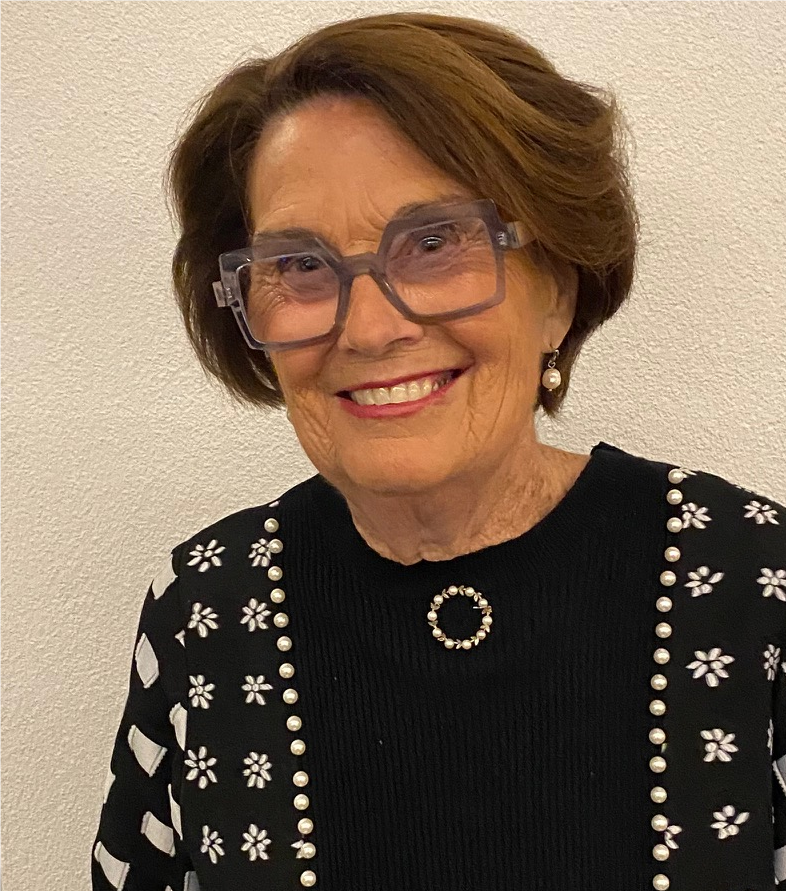
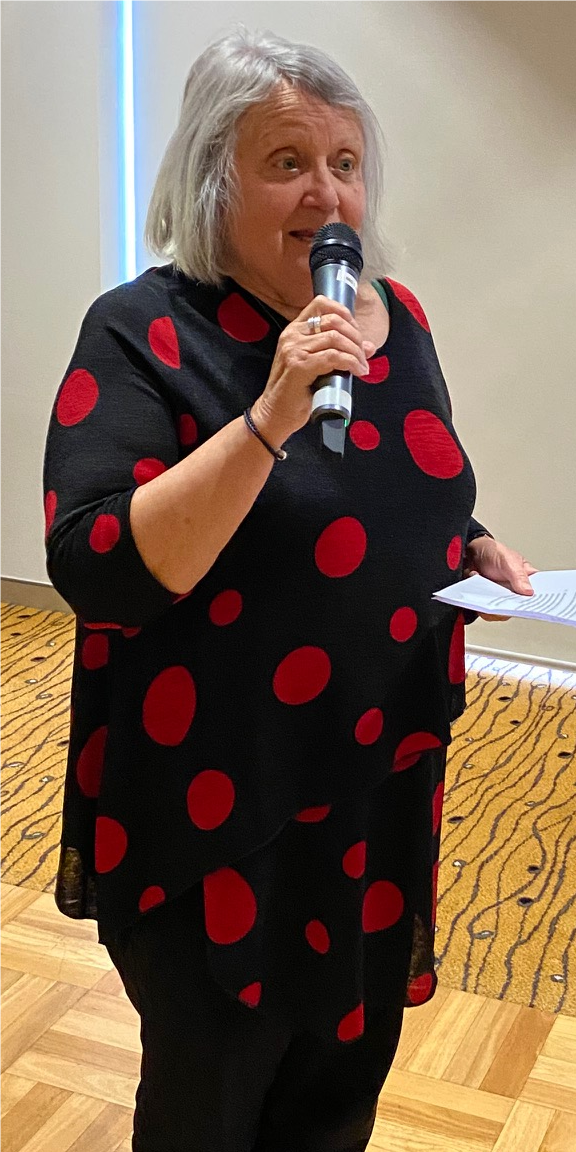 Vivienne Wood set the scene with the Thift Shop:
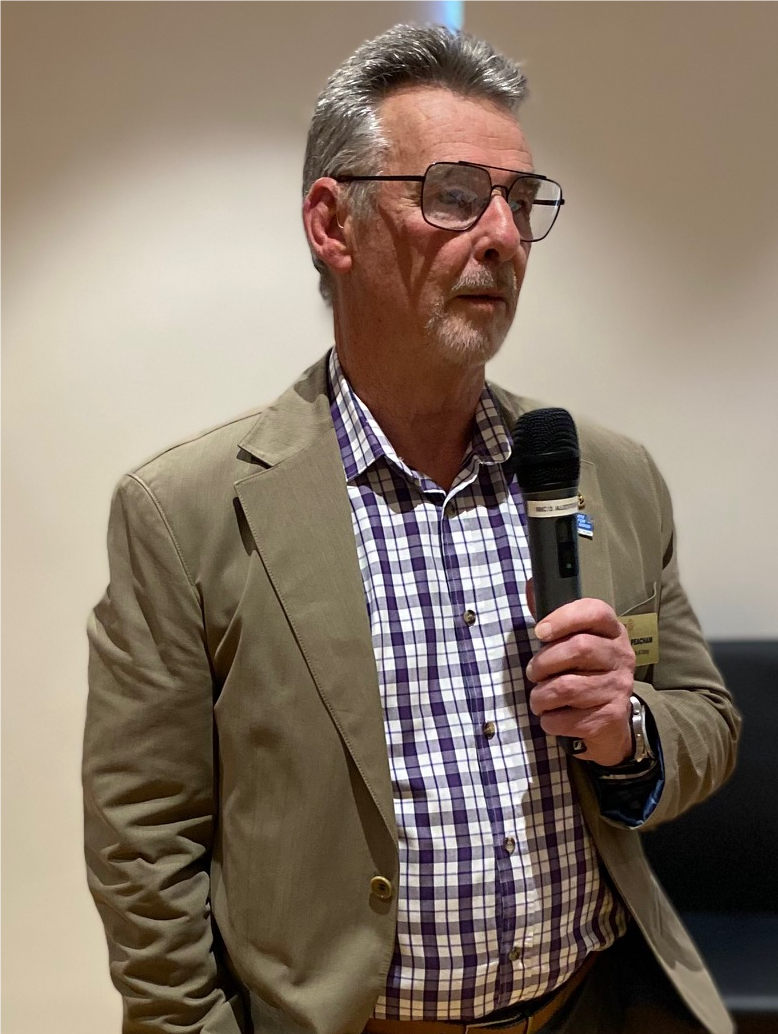 John Peacham said public image is a team effort with first priority given to modernising our Facebook page.....new material needs to be inserted on a weekly basis. The club's website is due for an overhaul but is less urgent because fewer people utilise it. President Rhonda urged members to check out our website this week and provide feedback by next Tuesday.
 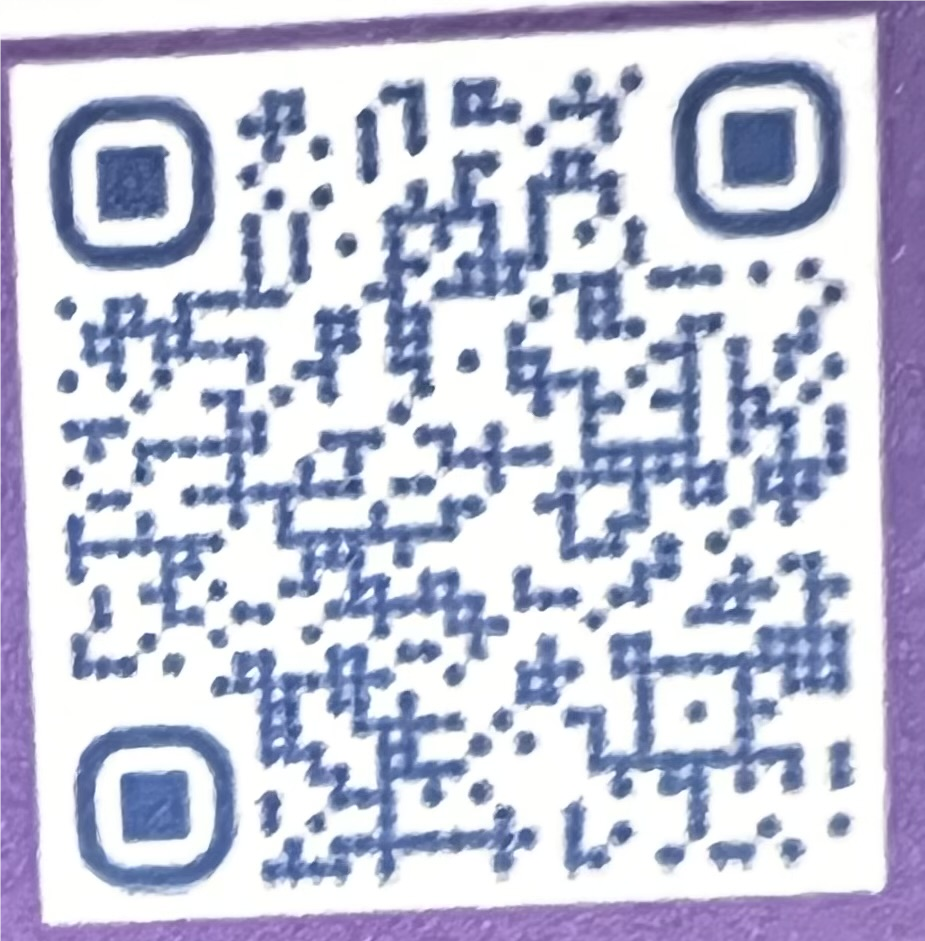 Christina Way is looking after the 'Lift The Lid Walk' for Mental Health on Sunday 9 November, a distance of 5km, commencing 8.30am in the SE Parklands. Please join in as a walker or a marshall. Registration is via a QR code......see opposite. Nathan White volunteered to organise 5 marshalls. Please respond directly to Nathan - nathan@nawlaw.com.au 0424 608 699