Please ensure that you respond promptly to the invitation to our next meeting, Monday is a public holiday and Damiens have requested numbers by Friday 9 March 2018
Our Last Meeting
Venue: Damien on Fisher
Event: The Royal Flying Doctor Service
Speaker: Dr Brian Wheeler
Visiting Rotarians: John Holds (Whyalla)
Guests: Dr Brian Wheeler, Shkiba Nasery, Aine Stirling, David Pisoni and John Peacham (for the
last time as a guest
Attendance: 24 Members and 4 Guests
President Heather’s Announcements
President Heather thanked Valerie Bonython for holding the fort during her absence in Tasmania.
Heather also requested that everyone advise of attendance at next Tuesday's meeting. Responses should be using the personal invitation, received via eMail, from Club Runner.
John Peacham is welcomed back into the Club
President Heather had the pleasure of inducting John Peacham back into Unley Rotary. John was introduced by David Middleton.
John lives in Highgate with partner Linda and spoodle Coco aka “the Boss”
Born in Tasmania, John grew up and went to school and University in Melbourne. Graduating with an Accounting degree, however the lure of a new field in Information Technology moved him into a new career lasting more than 35 years, with the last 15 years focusing on IT security and credit card fraud.
He came to Adelaide in 1994 to work with a team negotiating a 10 year whole of SA Government IT outsourcing contract. The negotiation was only supposed to take 3 months but ended up being 13 months and he never left.
Linda and John have 4 children and 4 grandchildren, the youngest is 19 months.
A previous member of Unley Rotary, John is not a stranger to many of the members. He left Rotary around five years ago because of work and travel pressures.
Linda and John are now pretty much retired and looking for other challenging opportunities in life. Looking forward to a lot more travel and working with charity “Cows for Cambodia” for which he will be returning to Cambodia in November.
His next challenge is next week, taking 32 German exchange students (15-year old’s) on a 9-day trip to central Australia which will be an exciting time.
Shkiba Nasery – Rotary Youth Leadership Awardee
Shkiba gave a very enthusiastic presentation of her Rotary Youth Leadership Award program. English is her second language and she expressed concern about giving the presentation however her enthusiasm for RYLA and previously RYPEN (Rotary Youth Program of Enrichment) experiences overshadowed any doubts about what she gained from both programmes.
Shkiba has been invited to be trained as a RYPEN leader for the Sunraysia event. She has also become the President of the Afghanistan Students Association something she doubted she could do if it had not been for the self-confidence as a result of attending RYLA.
Asked where she saw herself in 5 years’ time Shkiba replied, “ I want to complete my Master’s degree and then give back to Rotary for what Rotary has given me”.
Shkiba thanked the Rotary Club of Unley for sponsoring her.
The Royal Flying Doctor Service - Guest Speaker Dr. Brian Wheeler
The Reverend John Flynn had worked in rural and remote areas of Victoria and was commissioned by the Presbyterian Church to look at the needs of Outback people. His report to the Presbyterian Assembly in 1912 resulted in the establishment of the Australian Inland Mission (AIM), of which he was appointed Superintendent.
In 1928, he formed the AIM Aerial Medical Service, a one-year experiment based in Cloncurry, Queensland. This experiment later became The Royal Flying Doctor Service.
Flynn's missionary work involved the establishment of hospitals in bush communities. This, however, did not help those who lived far from any major community. Victorian pilot Lieutenant (John) Clifford Peel had heard about Flynn's work and sent Flynn a letter in 1917 explaining how he had seen a missionary doctor visiting isolated patients using a plane. Flynn immediately considered using aircraft to begin his idea, and the Australian icon was created.
Together with Alfred Traeger, Flynn began experiments with radio in the mid-1920s to enable remote outposts to contact a centralised medical base. The pedal radio was the first result of this collaboration.
Experimental aerial medical services commenced in 1926 and an injured miner was transported by air from Mount Isa to Cloncurry in November 1927.
By 1928, one of the founders of Queensland and Northern Territory Aerial Services, the company which would go on to become Qantas supplied the first aircraft to the fledgling organisation.
The Service Today.
The service is still heavily reliant on community support for funding, and is well respected across the country as an organisation that has contributed so much to rural, regional and remote communities.
Its services include.
Emergency – primary aeromedical response to accident or illness
Emergency – secondary aeromedical evacuation and medical retrieval services
Telehealth – 24 hours per day, 7 days per week, medical consultation services by radio, telephone or video call
Primary health care clinics – the transportation of a general practitioner for regular clinical visits to remote areas (often a circuit visiting several communities and/or stations). Clinics include general practice, nursing services, child and maternal health, Aboriginal and Torres Strait Islander health, Rural Women's GP Service, mental health, dental services, allied health and medical specialists.
Consultation, communication, and support for rural and remote doctors across Australia
Inter-hospital transfer of patients
Education and training opportunities and midwifery scholarships[10]
The service also uses not just aircraft but also four-wheel drives and other utility land vehicles to aid in transportation and communications.
Today the RFDS has:
67 aircraft, 24 medical bases, covers 71,000 air miles a day and transports 280,000 patients a year.
It has 2,500 medical chests located around Australia for doctors to use when providing remote consultations via radio or internet. All equipment and medical drugs in the each chest is numbered so the doctor can instruct people at the scene on what to do to treat a patient in situ.
New RFDS Centre.
The new RFDS centre opened at Adelaide Airport in October 2016. All services of RFDS are now based in the one location as well as 5 aircraft. A new PC124 Jet aircraft has been ordered at a cost of $10 million.
The RFDS relies on funding for its operation from State and Commonwealth money but all aircraft are purchased from community fundraising.
On Thursday 1st March, Patsy & Graham Beckett, Marlene Small, Valerie Bonython and Jerry Casburn members of our club, plus Youth Exchange Student Clara Scheele visited a meeting of the Rotary Club of Seaford.
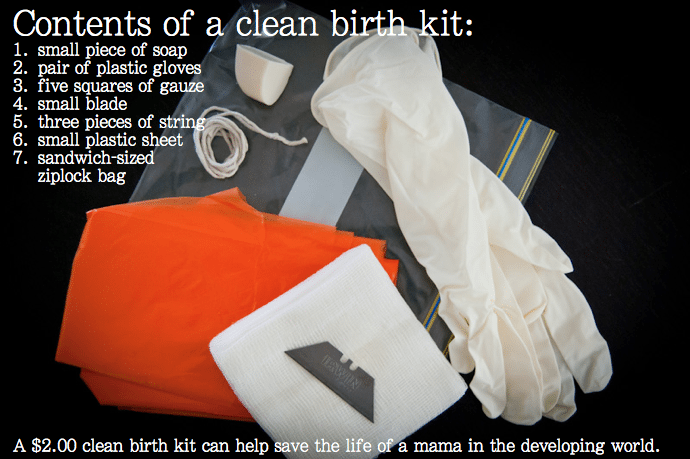
The principle speakers were members of Zonta who formed the Birthing Kit Foundation. The foundation provide kits made up by various service organisations and distributed in third world countries to enable clean births in what might otherwise be non-sterile conditions.
The presentation was of interest to the club as this is next planned project to be used as a demonstration at a recruiting drive planned for the Unley shopping centre in May of this year.
On order are 600 kits which will be purchased by the club and then distributed to needy countries by the birthing kit foundation.
Our members were made very welcome by the Seaford club and we were able to see a club that has developed, avoiding some of the traditional pitfalls adopted by older clubs.
Six members of the club attended the Women in Rotary breakfast held at Veale Gardens on South Terrace, celebrating International Women's Day. Namely, Graham and Patsy Beckett, Robyn Carnachan, Maria Galatsanos, Sorel Coward, Jerry Casburn also joined by Youth Exchange Student Clara Scheele. At a rough estimate, the function was supported by 150 Rotarians and guests from both Districts 9500 and 9520.
The keynote speaker was the now famous Sarah Brown, CEO of the Western Desert Dialysis Unit (Purple House). Sarah gave another compelling description of the need to provide services to our indigenous citizens.. The talk was interspersed with Sarah's brand of Pommie humour leaving many with aching sides and streaming tears.
The event donated all profits to Purple House. To find out more, see https://www.westerndesertdialysis.com/the-purple-house. A painting by aboriginal members from the APY lands was sold by secret auction, raising in excess of $2,000.
Spots
Trevor McGuirk: RI World President Ian Riseley is visiting Murray Bridge this Saturday at the invitation of Mobilong Rotary Club. Asked for more members from Unley to attend .
Patsy Beckett: Car Rally will be held on Sunday 28th October. Invited all members to participate. The route has been planned now.
Jason Booth: Invited members to attend a Nepali function. An email on the subject will be sent to members.
Maria Galatanos: Unley History Week commences Sunday 28th April. Maria invited members to attend.
Also, the Think Pink function will be held on Friday 26th October.
Pam Trimmer: Thrift shop Working Bee: Saturday 17th March from 10am on.
The Infernal Squares
Dennis Liddle won the squares and in the Happy and Sad Spots, President Heather spent a sad dollar, recounting her tale of woe with major computer problems – her computer email was hacked causing the loss of all emails and contacts.
Rotary News
Healing the Scars of War
In the mountains of Poland, 26 children traumatized by violence get a chance to be kids again at a Rotary camp.
By Iuliia Mendel Produced by Monika Lozinska
Beneath the emotional scars of living in a Ukrainian war zone, Mykyta Berlet flashes the same mischievousness of any other 12-year-old boy headed to camp.
He wants to laugh, play pranks and on the last night of camp “we will cover everyone with toothpaste,” he says excitedly.
Mykyta and 25 other Ukrainian youths headed to the resort town of Zakopane in the foothills of southern Poland are naturally focused on fun. But their two-week respite organised by Rotary members has a higher purpose: To help the children heal and cope with the trauma they may encounter when they go home.
Each camper has a parent or sibling killed or injured in the fighting in Ukraine. Psychologists at camp will guide them along the way during an itinerary that mixes escape and therapy.
Olga Zmiyivska, a member of the Rotary Club of Kharkiv Multinational in Ukraine, has brought children to the camp for two years and has witnessed its impact.
“After the trip, they are more willing to make contact and open their hearts,” she said.
War came into their homes
Thousands have died and millions have been displaced by the fighting between pro-Russia rebels and the Ukrainian military in eastern Ukraine.
Growing up in the shadow of that nearly four-year conflict, most of the campers don’t remember a life without war. They tell unrealistic stories about battles and keep silent about real horrors. Some are guarded and hyper vigilant. Others endure sleepless nights or nightmares. A few withdraw and emotionally shut down.
In Zakopane, nestled in the scenic Tatra Mountains, Rotary members give the children a chance to heal in a peaceful setting. The children sleep in comfortable cabins along a pristine lake flanked by green, rolling hills.
The program, called Vacation 2017 Zakopane: Well-Being for Ukrainian Kids, includes traditional camp activities and field trips along with support from mental health professionals. More than 100 children have attended over the past four years.
This year’s campers visited a mountain village to learn about local traditions, toured historic Krakow, and saw the castles, salt mines and hot springs of southern Poland. The routine activities are simple but powerful.
Yuriy Paschalin and Vlad Tsepun, both 12, became close friends after their fathers were killed by snipers. The field trips helped both boys start to relax and act like typical, curious children.
“This program allows these kids to stay kids and to live children’s emotions,” said psychologist and art therapist Olha Hrytsenko.
“They will observe and absorb another culture, attitude, and language, (and) will be able to compare and make conclusions about what is good and what is bad. It will help them to find themselves.”
Does it work?
The changes in the children are obvious, Rotary members say.
Anna Kaczmarczyk, a member of the Rotary Club of Zamosc Ordynacki, Poland, is the first person to meet the children when they start their trip.
Kaczmarczyk is the first person to meet the children in Lviv, Ukraine, when they start their trip. They may be nervous, which can make them irritable and aggressive.
But after the program, they are relaxed, smiling, filled with a new self-confidence.
“We continue this program because we know how these children react, how they change, how they become more open to the world, and how they look at the world the way it should be for a child,” Kaczmarczyk says. “War takes from them their childhood. And they still have their children’s dreams.”
After the children return home, they send letters and pictures about their camp experiences to program organizers and Rotary members.
Children have drawn portraits, colorful scenes of nature, castles and the kings and queens who live in them, and dragons. Sometimes, they write letters about what they observed. One girl marveled at the clean streets and friendly people.
Whether they are magical stories or practical observations, the children carry warm memories home with them.
Kids who experience violence can be prone to violence themselves; this program shows them a different path.
“After such traumas as car crash, natural disasters, [or] wars, people often go to two extremes: Either they stop being afraid of everything or they start being scared of everything. I think these children will belong to the first category,” psychologist Hrytsenko said.
Rotary Upcoming Events
Districts 9500 and 9520 Conference in the Barossa 23 - 25 March 2018
President Heather, Wendy Andrews, Leonie and Graeme Kewen, Patsy & Graham Beckett, Valerie Bonython & Graham Ey, plus Jerry & Briony Casburn will be at the conference, the first to be held jointly by both South Australian Districts.
Our Upcoming Meetings
Tuesday 13 March 2018 6 for 6.30pm at Damien on Fisher
Guest Speaker: Clara Scheele Long Term Youth Exchange plus Amy Tregenza & Aaron Rutherford National Youth Science Forum
Chair: Chad Leader | Set-up, Welcome & Attendance: David Middleton & Bob Mills
Tuesday 20 March 2018 6 for 6.30pm at Damien on Fisher
Guest Speaker: Rebecca Sullivan Bush Tucker
Chair: Jason Booth | Set-up, Welcome & Attendance: David Middleton & Bob Mills
Tuesday 27 March 2018 6 for 6.30pm at Damien on Fisher
Guest Speaker: Kate Clements A Flight Against All Odds
A doctor, lawyer, and a Rotarian in charge of fundraising all die and arrive at the Pearly Gates about the same time. St. Peter tells them they may each have one thing to take with them to Heaven.
The doctor is first, and asks for $1 million. This is given and proceeds to enter Heaven. The lawyer, not to be outdone, asks for $2 million. "Very well," say St. Peter and opens the gate to Heaven for the lawyer.
Finally it is time for the Rotarian, who had just finished a fundraising project for The Rotary Foundation. St. Peter asks him what he would like to take to Heaven. The fundraiser moves up very close to St. Peter, and in a soft voice asks, "It it's not too much trouble, could I just have the names of those two people who were ahead of me in line?"
Behind the Badge
It is common practice to expect new Rotarians to give a talk to their fellows about themselves, their early life, their training and the job that they do. This is called a "Job Talk" by some and "The Man Behind the Badge" by others.
Later in Rotary life the Rotarian is often expected to fill the speaker diary by giving a talk which is NOT connected with his work. A hobby such as stamp collecting or model trains would be a good example.
My story recounts the time when Fred arrived at the meeting of his Rotary club to be reminded that he was the speaker for the evening and this was not a "Job Talk".
He had forgotten and was not prepared. He sat at the top table, beside the Chairman for the evening, and thought about a subject during the meal.
When he was announced he spoke about sex. The meeting listened to every word and asked many questions. It was a success.
When he arrived home, Mary his wife, asked "How was Rotary?".
"It was a good meeting" he said.
"What was for dinner?" she asked.
"Beef, and it was good" he answered.
"Who was the speaker?" she continued.
"I was" he replied.
"What did you speak about?"
Now he can see trouble looming!
"Sailing" he lied.
The next morning Mary was shopping in the town and visited the butcher who was also a Rotarian.
"Fred gave a wonderful talk last night." he said.
"Yes" said Mary, "but I don't understand why he chose the subject. The first time he did it he was sick and the second time his hat blew off".



 niversity in Melbourne. Graduating with an Accounting degree, however the lure of a new field in Information Technology moved him into a new career lasting more than 35 years, with the last 15 years focusing on IT security and credit card fraud.
.jpg) her second language and she expressed concern about giving the presentation however her enthusiasm for RYLA and previously RYPEN (Rotary Youth Program of Enrichment) experiences overshadowed any doubts about what she gained from both programmes.
her second language and she expressed concern about giving the presentation however her enthusiasm for RYLA and previously RYPEN (Rotary Youth Program of Enrichment) experiences overshadowed any doubts about what she gained from both programmes.  The Reverend John Flynn had worked in rural and remote areas of Victoria and was commissioned by the Presbyterian Church to look at the needs of Outback people. His report to the Presbyterian Assembly in 1912 resulted in the establishment of the Australian Inland Mission (AIM), of which he was appointed Superintendent.
 By 1928, one of the founders of Queensland and Northern Territory Aerial Services, the company which would go on to become Qantas supplied the first aircraft to the fledgling organisation.



 The keynote speaker was the now famous Sarah Brown, CEO of the Western Desert Dialysis Unit (Purple House). Sarah gave another compelling description of the need to provide services to our indigenous citizens.. The talk was interspersed with Sarah's brand of Pommie humour leaving many with aching sides and streaming tears.