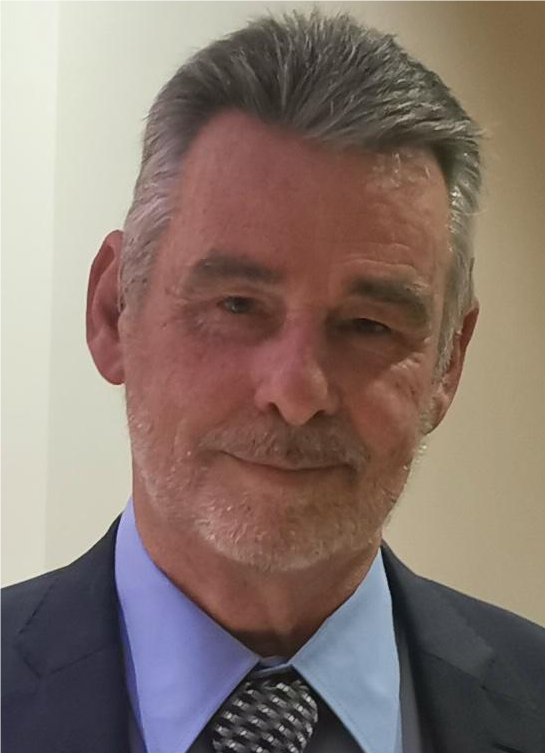
Guests: Astrid Sorrell, Deborah Forbes (both future members) andRob's assistants Joanne and Eukumbeth
Attendance: 24 members 4 guests
Welcome
President John opened the meeting and called on Paul Duke to introduce the guest speaker.
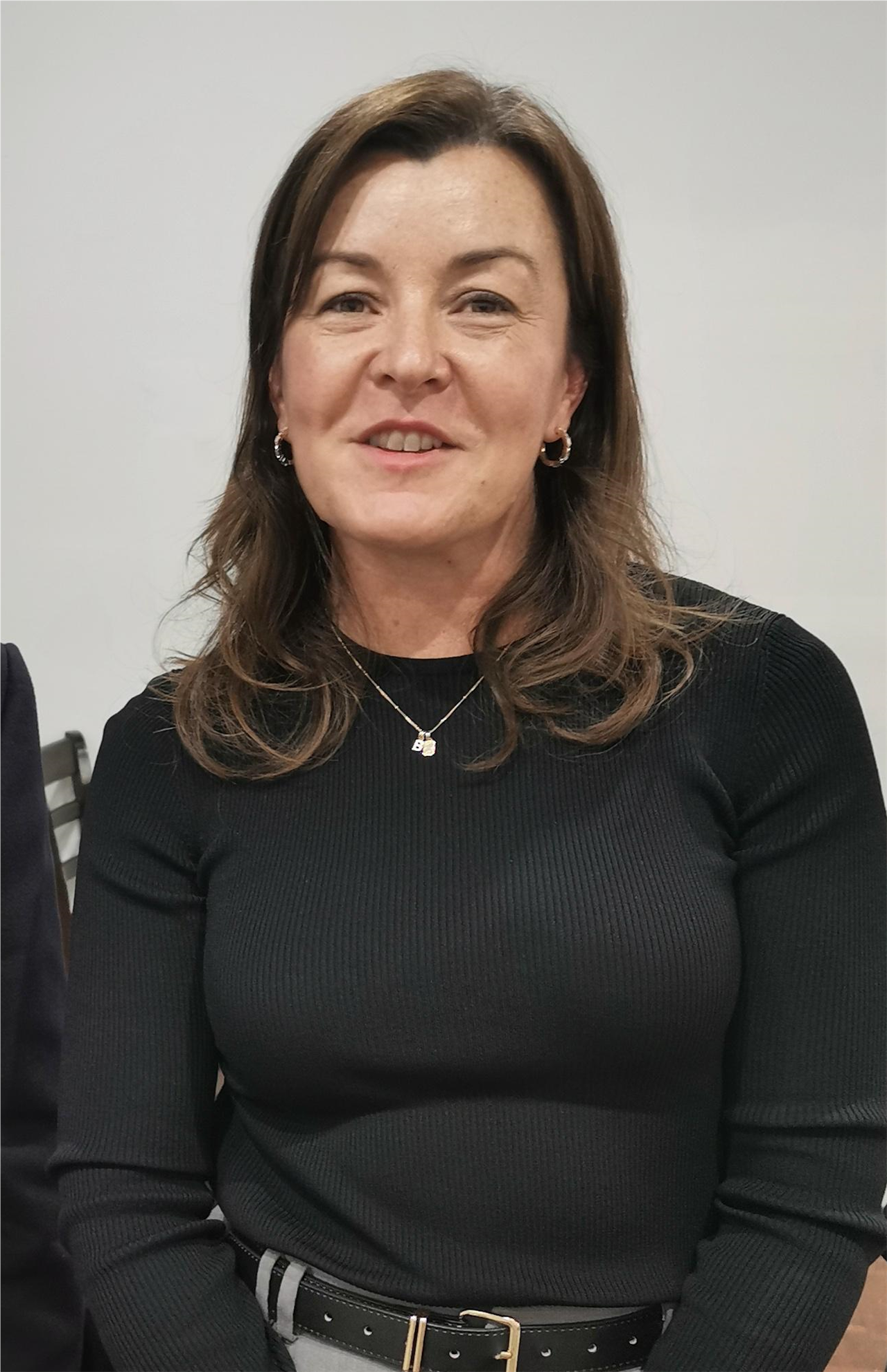
Guest Speaker: Amanda Stephenson - Motor Neurone Disease
Amanda Stephenson is a member of the Motor Neurone Disease Association of SA, and regularly speaks about the Association’s work.
Motor Neurone Disease (MND) is a terminal condition, and the cause is unclear. For some, there may be a genetic predisposition, but this isn’t always the case. It is always debilitating to the extent that those suffering are eventually unable to care for themselves and need a high level of care leading up to death. MNDSA provides support for this care.
Those with MND fall into two categories. Those who are diagnosed before age 65 who will receive support throughout life from the NDIS, and the others who will get a lower level of support through the Aged Care system. MNDSA is there to support those in the second category because the government support is insufficient.
Amanda’s story is deeply personal. Her mother was diagnosed with MND in 2019 and she died at the age of 68. She was a single mum who moved to Tasmania with her two children after the separation, working in the Aged Care system doing several jobs to support the family. Her MND started with flu like symptoms that developed into a respiratory condition and then difficulty speaking. She lost the ability to eat, and while she was fine cognitively, her body simply closed down and she was tragically trapped inside.
She was placed into a Nursing Home, but they have little experience with MND patients. At any one-time Nursing Homes will limit the number of MND residents to one (sometimes none) due to the high level of care required. The Association exists to support these people.
To an extent, Amanda’s talk was about the difference between the MND Association and the organisation ‘Fight MND’ co-founded by the high profile MND sufferer Neale Daniher. ‘Fight MND’ has been hugely successful in raising over $100 million for research.
MNDSA is solely concerned with supporting suffers through the process of dying and struggles to differentiate itself from the ‘Fight MND’s fund raising effort. Their recent walk to raise funds was well supported and they raised over $100,000. MNDSA has 24 people working in their office to support the 149 sufferers now in the state. The number remains fairly stable because the average life expectancy after diagnosis (around two years) is similar to the average time it takes to diagnose a new sufferer.
Presidential Announcements:
The Bunnings BBQ on Monday was washed out. John thanked Paul, Brendan, Patsy, and Greg for their efforts, and apologised for Christina for not letting her know the afternoon had been cancelled. We broke even, getting rid of past stock and keeping the new stock in the freezer for next time.
John recently visited Jerry Casburn and reported he was much better, while not able to walk yet. Briony is able to take him out regularly, and Jerry is hoping to be able to attend the Changeover.
Ken Haines needs two knee replacements and is due to have one soon. We are unlikely to see Ken for the next six months.
John acknowledged the support the Club had received from Margaret Payne who passed away in the past week. Our condolences have been conveyed to our honorary member David.
This year’s donation of $5,000 has been made to the Rotary Foundation lifting our support to just under $250,000 since the club started. (Probably close to $1 million in today’s dollars)
While the survey about the proposed move to two meetings per month suffered technical difficulties, it was clear to John that there was sufficient support for maintaining the status quo to put the alternative proposal on the back burner for the moment. He went on to suggest that those who want to retain the status quo needed to step up to the plate and help with the work required.
Paul Duke and John are looking to trade in the current very large and unwieldy trailer for something smaller and easier to manage. There were no objections.
Spots
Patsy Beckett is one of the organisers of the Changeover Night scheduled for 1st July. She is looking for photos of the events over the past two years of John’s presidency to build a commemorative presentation. Those with material are asked to make it available.
Ross Smith thanked Hadyn Baillie for being the first to donate a case of wine for the Quiz Night and asked others to emulate his effort.
Finale
Valerie Bonython won the money and the chocolates but she insisted on a new draw (for the chocolates) and Ross Smith was the lucky winner even though he hadn't booked to attend the meeting, just to demonstrate the life is unjust!
After a joke about a man with one sore leg the meeting closed at 8.00pm precisely
ROTARY INTERNATIONAL NEWS
A Rotary scholar uses technology as a force for good
By Nathaniel Reade
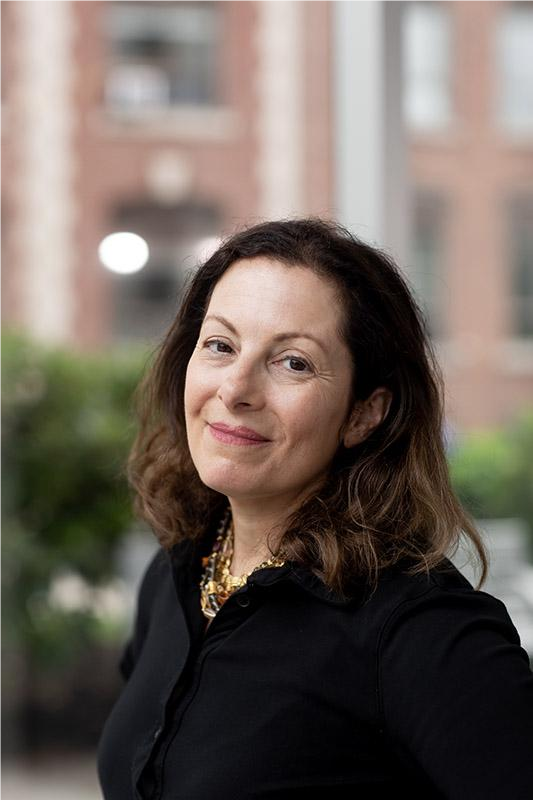
Like so many, Beth Simone Noveck found her mind swirling with questions during the early days of the COVID-19 pandemic: Was it safe to go outside? If she got food delivered, would she need to wipe down the packaging? Was she a bad mother for wearing pajamas all day or repeatedly feeding her son cereal for dinner? “Everyone, of every religion, class, and country, faced this incredible challenge,” she remembers. “There was a feeling of helplessness.”
In the midst of the uncertainty, Noveck drew on her twin interests in technology and government, cultivated during her time as a Rotary Ambassadorial Scholar. As the chief innovation officer for the state of New Jersey at the time, she and her team quickly built a website with centralized COVID-19 information, a symptom tracker, an online form that inventoried supplies of medical and personal protective equipment, and another that coordinated donations of that equipment.
“It’s a core value of Rotary,” she says, “that people come together to serve their community, and that by working in groups you don’t have to be a superhero to do extraordinary things. As difficult as COVID was, and as much as I regret feeding my child cereal so often, I felt good that I could be useful and act.”
Beth Simone Noveck is in awe of the Rotary members who made it possible to attend Oxford. “I am so grateful,” she says.
Courtesy of Northeastern University
Noveck grew up in Toms River, New Jersey, on a former chicken farm that her mother’s parents, refugees from Germany, started in 1937. She recalls a childhood of cats and trees and bare feet in the dirt, the earthy smells of cut grass and damp soil, picking flowers and canning vegetables. The chickens were gone by then, but her family still grew vegetables for themselves and to sell. “At age 4, I was made the VP of a business called the Greener Thumb,” she says, “which meant sitting on the front lawn and selling tomatoes.”
She learned early on about technology. Her father, a rabbi, was retired, so her mother became the principal earner, not only selling vegetables but trading stocks preinternet. Noveck grew up with the mechanical click-clack of a ticker-tape machine. Her mother then started a travel agency and in 1982 brought home a magical new thing called an IBM personal computer. Thus began Noveck’s love of technology, which she has melded into her other interests ever since.
That computer, Noveck says, “enabled my mother to raise two kids, cook three meals a day, earn a living, and also engage with the wider world far beyond where we lived. So in my experience it was a significant tool of empowerment.”
Noveck’s grandfather was a Rotarian. In college at Harvard, she heard about and applied for an “extraordinarily generous” Rotary Foundation scholarship to study abroad for a year, which she says was “so formative for my career and the work I do.”
The scholarship sent her to the University of Oxford in England in 1992, and she studied political science and democratic theory. She remembers great discussions and making friends from around the world with whom she remains close.
Noveck is still in awe of the many Rotary members whose contributions made her experience possible. “I went to college on a scholarship and could never have afforded Oxford, so this kind of experience for a whole year allowed me to really go in-depth into the work I started there,” she says. “My historical study of Germany and Austria in the 1920s and ’30s allowed me to investigate why some countries are able to maintain democracy, and why others crumble into fascism.”
After Oxford, Noveck earned a PhD at the University of Innsbruck in Austria and a law degree at Yale. She clerked for a year in the U.S. District Court for the Southern District of New York, while also managing the team that built a software program called Unchat, which promoted “democratic deliberation and distance learning.”
For two years she served in the White House under President Barack Obama, leading the White House Open Government Initiative to make the government more transparent and participatory. She has published three books and numerous articles, and she’s had professorial stints at Yale, Stanford, the Massachusetts Institute of Technology, New York University, and the University of Pennsylvania. She is now a professor at Northeastern University in Boston.
Noveck points out that trust in government has dropped precipitously over the decades since President Ronald Reagan’s famous quote, “The nine most terrifying words in the English language are: I’m from the government, and I’m here to help.” She says that government can use new technologies, including artificial intelligence, to improve its responsiveness to people’s needs. She ticks off successful examples: programs and apps that have streamlined food-assistance applications, eased job searches, and reduced cardiac deaths by alerting people trained in CPR to a cardiac emergency nearby.
Much of her current work involves teaching young people skills to use technology to improve the world. Her former students have created apps that helped people experiencing domestic abuse and taught information technology job skills to refugees. As Noveck said in a TED Talk, “When we start by teaching young people that ... we have the power to change our communities, to change our institutions, that’s when we begin to really put ourselves on the pathway towards ... this open government revolution.”
“I am so grateful to Rotary for their support,” she says. “It provided me with opportunities, new vistas, a sense of purpose, and an ethos of service. It was extraordinary.”
This story originally appeared in the May 2025 issue of Rotarymagazine.
Coffee Chat at Impressa, Unley Shopping Centre
10.30 am on the first Friday of the month is good for a chat with Rotary friends and a caffeine fix - Next one is Friday 6 June 2025
Upcoming Meetings
Tuesday 27 May 2025 6 for 6.30pm La Scala Restaurant
Guest Speaker: Kyllie CallaghanWhat's the Red Cross about?
Welcoming team: Ross Smith and Vera-Ann Stacey
Apologies and Meeting Enquiries to: Secretary Greg McLeod on 0417 811 838 or email to secretary@unleyrotary.org.au
Venue Set-up Enquiries to: Bulletin Editor Stephen Baker on 0403 687 015
Saturday Thrift Shop Roster
Early Shift: 10.00am to 1.00pm Late Shift: 1.00pm to 4.00pm
Early: Bob Mullins & Wendy Andrews | Late: Virginia Cossid & (Paul Duke) Brenton Judge
Rotarians, who are unable to attend as rostered, please arrange a swap or as a very last resort contact: Vivienne Wood 0408 819 630; e-mail: vwood@ozemail.com.au
Mitre 10 and Bunnings Barbeques
The Mitre 10 BBQs are the first and third Saturdays of each month. Morning shift 8.30am - 12 noon; afternoon shift 12.00 - 3.30pm, then clean-up.....next scheduled is Saturday 21 June 2025
ALL the Bunnings Mile End Barbeque shifts are from 8am to 5pm
We have been allocated the last Monday of each month, the next being Monday 30 June 2025
The Tale End.....
After last week guest speaker - jokes about Trains
Q: Why can't the engineer be electrocuted?
A: Because he's not a conductor!
Q: Why can't a steam locomotive sit down?
A: Because it has a tender behind
A mother was working in the kitchen listening to her 5-year-old son playing with his new electric train in the living room. She heard the train stop and her son saying, "All of you sons of bitches who want off, get the hell off now...because this is the last stop! And all of you sons of bitches who are getting on, get your asses in the train...because we're going down the tracks."
The horrified mother went in and told her son, "We don't use that kind of language in this house. Now I want you to go to your room and you are to stay there for TWO HOURS. When you come out you may play with your train again but I want you to use nice language." Two hours later, the son came out of the bedroom and resumed playing with his train. Soon the train stopped and the mother heard her son say..."All passengers, please remember your things, thank you and I hope your trip was a pleasant one. We hope you will ride with us again soon." She heard her little darling continue..."For those of you just boarding, remember, there is no smoking in the train. We hope you will have a pleasant and relaxing journey with us today."
As the mother began to smile, the child added, "For those of you who are pissed off about the TWO HOUR delay.....please see the bitch in the kitchen."
This email was sent by Stephen Baker
Rotary Club of Unley | PO Box 18 | Unley | SA | 5061 | Australia



 Amanda Stephenson is a member of the Motor Neurone Disease Association of SA, and regularly speaks about the Association’s work.
 Like so many, Beth Simone Noveck found her mind swirling with questions during the early days of the COVID-19 pandemic: Was it safe to go outside? If she got food delivered, would she need to wipe down the packaging? Was she a bad mother for wearing pajamas all day or repeatedly feeding her son cereal for dinner? “Everyone, of every religion, class, and country, faced this incredible challenge,” she remembers. “There was a feeling of helplessness.”